




Key Takeaways
- Compare an Icy Strait Hoonah group tour with cruise line shore excursions by looking at group size, timing, and who actually leads the trip. Small-group guided travel usually means better wildlife viewing and fewer wasted minutes.
- Check whether the tour is locally owned before booking. An Icy Strait Hoonah group tour that keeps money with local guides and families gives travelers more value than a packaged tour padded with cruise margins.
- Prioritize clear meeting instructions and a hard on-time return. For cruise passengers, a good group tour isn’t the one with the longest itinerary — it’s the one that gets them back to the ship without drama.
- Look for real cultural content, not generic commentary. The strongest Hoonah group tour blends Tlingit storytelling, village history, and wildlife viewing in a way that feels lived-in, not scripted.
- Match the tour length to the port call. A 2-hour or 3-hour guided shore excursion can beat a bigger, slower option if the day is tight and the goal is authentic Alaska rather than a bus ride.
- Read reviews with one question in mind: did the tour feel worth the money? The best Icy Strait Hoonah group tour earns trust by delivering local insight, small-group comfort, and real value for cruise travelers.
Most cruise passengers still pay extra for the big-name shore trip, then spend half the ride staring at the back of a bus. The smarter choice is the icy strait hoonah Group Tour, especially for travelers who want real wildlife time, a local voice, and a fairer split of the money.
That matters more than ever now. Small-group tours don’t just feel nicer; they change what guests actually see. A van with 10 people can stop fast when a bear steps out, while a coach stuffed with 40 people is still finding a parking spot. And when the guides are Tlingit residents who’ve grown up with the same bears, trails, and tidal habits, the stories don’t sound scripted. They sound lived-in. Honest answer? That’s what most travelers remember. Not the cruise margin. Not the glossy brochure. The people who showed them the place.
Why an Icy Strait Hoonah Group Tour Feels Different From a Cruise Line Shore Excursion
About 10 passengers in a van can see more than 40 people on a bus. That’s the odd truth here, — it’s why an icy strait hoonah Group Tour feels less like transit and more like guided travel with a purpose. The pace stays open. The guide can stop when a bear tracks along the brush line, not after a fixed “city tour” script like some hop-on, hop-off setups in London, Madrid, or Brussels.
Small-group guided travel versus big bus transit and hop-on, hop-off style crowds
For cruise passengers, the difference shows up fast. A icy strait guided group excursion keeps the group tight, so the guide can answer questions, adjust for weather, and give better sightlines for photos. That matters on an afternoon shore stop when time is short and nobody wants to waste 20 minutes loading a double decker. Realistically, a small bus tour icy strait point setup beats a noisy crowd if the goal is wildlife, not just seats.
Why local ownership changes what guests hear, see, and pay for
A locally owned hoonah sightseeing group tour means the stories come from people who live them. That changes the tone. Instead of recycled commentary, guests hear about salmon runs, berry season, and how a village works when winter closes in (not unlike the tight timing some train tours in Switzerland or transit links in Korea deal with). The money stays with the guide, not a cruise margin.
How group size affects wildlife viewing, timing, and photo stops
The best small group tour icy strait travelers book usually gives three things: fewer window fights, faster photo stops, and less waiting. That’s it. Better odds, better rhythm, better value.
- Wildlife viewing: shorter stopping distance when a bear or eagle appears.
- Timing: easier ship return with fewer loading delays.
- Photos: more space, fewer elbows, better angles.
What Travelers Actually Get on a Hoonah Group Tour Beyond the Standard Shore Excursions
Write this section as if explaining to a smart friend over coffee — casual but accurate — specific. An icy strait hoonah Group Tour isn’t a hop-on, hop-off city run with a double decker and a subway map. It’s a guided ride in a small van, usually 10 guests or fewer, with a real person who knows the roads, the bears, and the stories behind both. That’s the difference. Not polish. Substance.
Brown bear viewing, eagles, and other wildlife in a real natural setting
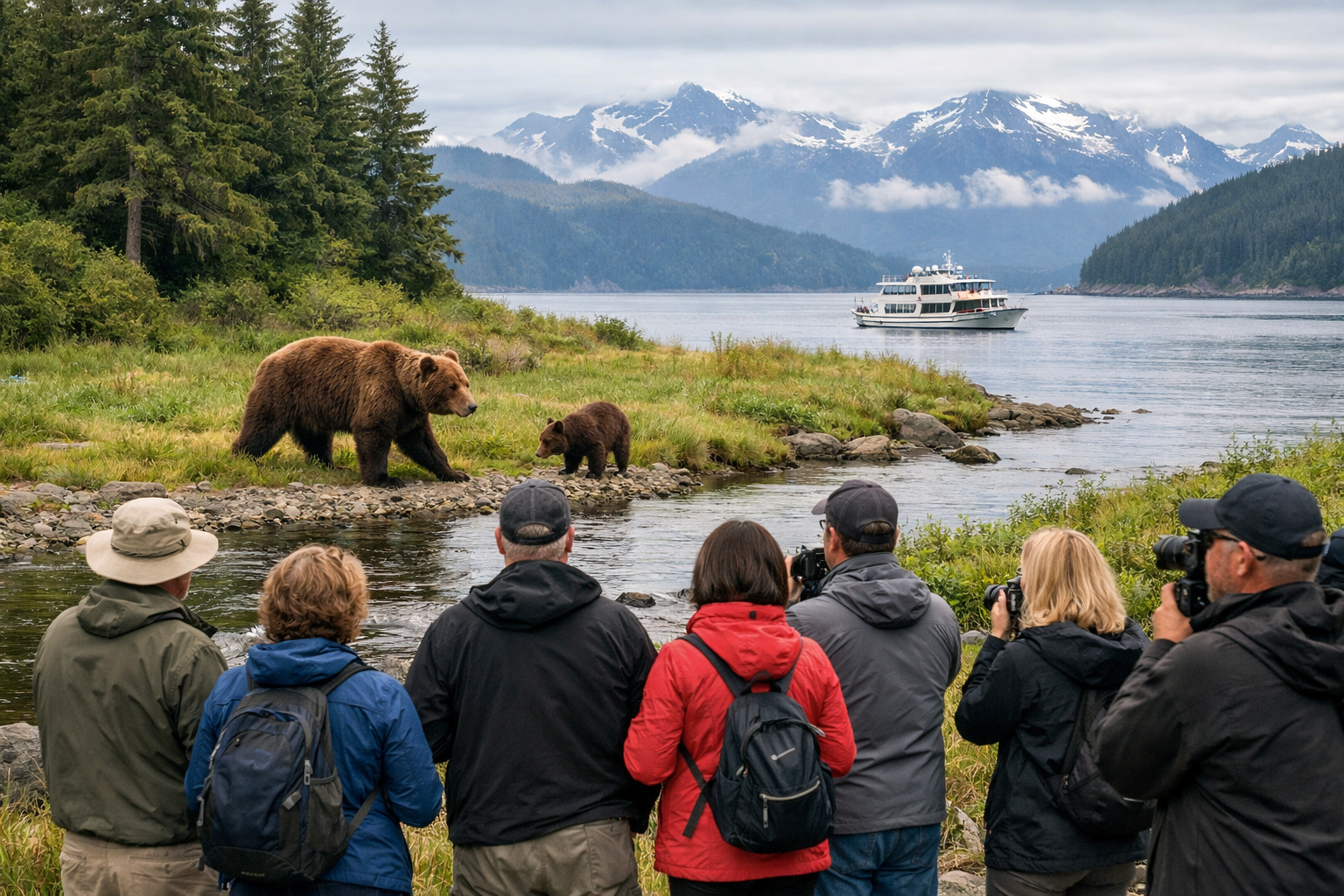
On a good day, guests may spot brown bears, bald eagles, deer, otters, salmon, or waterfowl without the zoo feel that cruise shore excursions sometimes have. The honest answer is that wildlife isn’t a train schedule, and that’s part of the appeal. A best small group tour icy strait gives travelers more time to stop, scan, and ask questions instead of being rushed back to the bus.
Tlingit storytelling, village history, and cultural context guests don’t get from generic tours
Here’s what most people miss: a icy strait hoonah Group Tour can feel like a conversation, not a lecture. Guests hear Tlingit history, medicinal plant use, — village life from lifelong residents, which gives the trip more weight than a generic guided loop. That’s why a small bus tour icy strait point often lands better than a larger, commercial ride.
Short walks, clear meeting instructions, and a relaxed pace for cruise passengers
For cruise passengers, the practical side matters. A hoonah sightseeing group tour and an icy strait guided group excursion both work well for travelers who want short walks, clear pickup directions, and a return that doesn’t leave them clock-watching. Realistically, that’s worth more than a fancy name on a ticket.
Experience makes this obvious. Theory doesn’t.
- Good fit: seniors, couples, and families
- Best for: guests who want wildlife plus culture
- Watch for: weather, timing, and no wildlife guarantees
The Money Question: Why Direct-Booked Group Tours Keep More Value With Local Guides
A couple stepped off a cruise ship and compared notes in the corridor. One had paid the cruise line rate; the other booked an icy strait hoonah Group Tour direct and saved enough for dinner and a second souvenir. That gap isn’t small. It’s the difference between money that leaves on a corporate train and money that stays with the people guiding the day.
Comparing cruise margins, third-party booking fees, and direct operator pricing
Cruise desks often add 30% to 50% before the guest ever boards a van. Third-party sites can add another layer, which is why a small bus tour icy strait point booked direct usually reads cleaner on the receipt. For a 3-hour tour, that can mean money back in the traveler’s pocket.
How locally owned tours support wages, families, and community spending
A local operator pays local wages, buys fuel nearby, and keeps the guide’s tip in the same community. That matters more than glossy extras on a shore day. An hoonah sightseeing group tour also puts income into homes, school costs, and the next season’s repairs (not a corporate office in another city).
Why value-for-money matters more than flashy extras on a tight port schedule
Short port time rewards the plain truth: a good route, a prompt pickup, and a guide who knows the road beat a double-decker gimmick every time. The best small group tour icy strait choice is the one that gets guests back on time and still leaves room for wildlife, stories, and a real meal later. That’s why an icy strait guided group excursion makes practical sense for cruise passengers who want value, not just volume.
Timing, Trust, and Port-Day Reality for Icy Strait Hoonah Group Tour Guests
Time is the whole game on port day. A cruise guest can love bears, culture, and a good story, — if the clock gets ignored, the day turns sour fast.
An icy strait hoonah Group Tour works because it fits the ship schedule instead of fighting it — and that’s the part most people miss.
On-time return matters more than a long itinerary
The smartest choice is the one that gets guests back with breathing room. A 2-hour or 3-hour guided tour leaves space for dock delays, camera stops, and the slow walk back to the gangway, which beats a grand, overpacked city-style tour with a train-transfer feel. Realistically, cruise travelers don’t need hop-on, hop-off extras, double decker gimmicks, or a long night block that eats the afternoon.
What to expect from pickup, van capacity, and 24-hour booking rules
Small-group travel means a passenger van, not a bus with 40 strangers. The better setups usually cap the group at 10 or fewer, which helps with views, questions, and photo stops. Travelers also need to book at least 24 hours ahead, so the smart move is to lock it in before the ship leaves the last open internet window.
For guests comparing reviews, hoonah sightseeing group tour is the kind of phrase that signals a local operator, not a cruise-margin filler. The same goes for best small group tour icy strait, small bus tour icy strait point, and icy strait guided group excursion.
Sounds minor. It isn’t.
Why limited port hours make a 2-hour or 3-hour guided tour a smarter fit than a larger tour block
With a short stop, a tight plan wins. Less waiting. Less worry. More actual tour.
Why This Group Tour Matches What Today’s Cruise Travelers Are Searching For
Why do so many passengers end up comparing shore excursions the same way they compare a train in London or a hop-on, hop-off day in Barcelona? Because they want proof. This icy strait hoonah Group Tour answers that search fast: small group, local guide, real wildlife, no cruise-line markup. Simple. Useful.
Authentic Alaska Native experience versus commercialized city-style tour products
Here’s what most people miss: a hoonah sightseeing group tour isn’t built like a double-decker city loop in Philadelphia or a subway stop in Korea. It’s guided travel with room to ask questions, hear Tlingit stories, — actually see the place as people live it. That’s the difference between a polished transit product and a lived-in shore experience.
For travelers comparing reviews from Lisbon, Brussels, Madrid, or Doha, the appeal is the same — a small bus tour icy strait point feels less rushed and more human. Less crowd control. More conversation. More value for the time.
Reviews, reliability, and small-group trust signals that matter to retirees and families
Retirees and families don’t want surprises. They want clear meeting instructions, a calm pace, and a guide who knows the schedule. An icy strait guided group excursion gives them that, along with the kind of trust signals that matter: 28+ years in business, small vans, and a perfect on-time record for ship returns.
- 10 or fewer guests keeps the group quiet enough for bear spotting.
- Short walks work for mixed mobility levels.
- Reviews matter because they show the tour isn’t all talk.
How the best guided shore excursions answer the real question: is the visit worth it?
Yes — if the tour gives more than a photo stop. The best small group tour icy strait pairs wildlife, culture, and time discipline in one afternoon, not a generic city-style loop with a grand promise and thin delivery. That’s why the answer lands: the visit feels worth it because it doesn’t waste the hour.
Most people skip this part. They shouldn’t.
Frequently Asked Questions
Is Hoonah in Icy Strait Point?
Yes. Hoonah is the community tied to the Icy Strait cruise area, and it’s the home base for an icy strait hoonah Group Tour that feels local instead of staged. That matters if the goal is a real group tour, not a big bus with canned commentary.
Is Icy Strait worth a visit?
Yes, if the trip is chosen well. The area gives travelers wildlife, culture, and shore excursions that don’t feel like a cookie-cutter stop on a cruise route. A small-group tour is the better buy because you get more room, more time, and better odds of hearing something real from a local guide.
What is the best tour company for Alaska?
There isn’t one single answer for every traveler, but the best choice is usually the company that knows the place, keeps the group small, and gets cruise passengers back on time. For an icy strait hoonah Group Tour, a locally owned operator such as Wilderness Island Tours is the right call for anyone who wants authenticity over polish. That’s the honest answer.
And that’s where most mistakes happen.
How big is a typical group on this kind of tour?
Usually small. Think passenger vans, not double-decker buses, so you’re not spending the whole afternoon fighting for a window seat. For cruise guests, that smaller group size makes wildlife stops, photos, and questions much easier.
Will we definitely see bears on the tour?
No, and any operator promising that is playing games. Wild animals don’t work on a schedule, even in a place known for strong bear viewing. The better tours are upfront about that and still give you a solid shot at seeing bears, eagles, deer, and other wildlife along the way.
How much walking is involved?
Not much. This is a driving tour with short stops, so it works for older travelers, families, and anyone who doesn’t want a hard hike before lunch. If someone can manage a few easy steps and get in and out of a van, they’re usually fine.
What should cruise passengers do to avoid missing the ship?
Book a tour with a strong on-time record and clear meeting instructions. Bring the confirmation, read the pickup details, and don’t cut it close with boarding time. A reliable icy strait hoonah Group Tour should make that part feel calm, not risky.
Is this a better value than booking through the cruise line?
Often, yes. Independent shore excursions usually cost less than cruise line versions, and the group is smaller, which makes the value easier to see. You’re paying for the guide, the experience, and the local knowledge—not a giant bus and a markup.
How far in advance should a group tour be booked?
At least 24 hours ahead, and sooner if the port day is during peak cruise season. Small tours fill fast because they don’t have the capacity of a large coach operation. Waiting until the last minute is a bad bet.
This is the part people underestimate.
What makes a local group tour different from a generic city shore excursion?
Local guides know the stories, the roads, and the rhythm of the place. A generic city tour can feel like any stop from London to Lisbon to Philadelphia if the script is weak. A real Hoonah group tour gives travelers something better: lived experience, plain talk, and a sense that the money stayed with the community.
The appeal of an icy strait hoonah Group Tour is plain. It keeps the money moving toward local guides, not cruise margins. It also gives travelers a smaller, calmer setting where bear country, Tlingit stories, and practical port-day timing all fit together without the usual rush.
That matters more than a glossy brochure. Cruise passengers who want a real look at culture and wildlife don’t need a giant bus or a scripted stop. They need a guide who knows the area, a van with room to breathe, and a schedule that gets them back with time to spare. Simple. Better.
For readers planning a cruise stop, the smart next step is to compare the ship’s shore excursion against a locally guided option, check the meeting details, and book the tour size that matches the port window. The right choice won’t just fill a few hours. It’ll make the day feel like Alaska actually showed up.
For more great reading, visit our site and explore related topics.